Contents
- 0.1 Traditional Catholic prayers such as the Our Father, Hail Mary, Rosary, and Prayer of St. Francis are vital for enhancing faith and building a personal connection with God.
- 0.2 Each prayer offers distinct insights and emphasizes important values like peace, service, and intercession. The Our Father exemplifies the core of prayer, the Hail Mary underscores Mary’s intercessory role, the Rosary facilitates meditation on Christ’s life, and the Prayer of St. Francis inspires a life dedicated to service and compassion.
- 0.3 Collectively, these prayers enrich individual spirituality and strengthen community ties among believers, fostering a deeper and more genuine expression of faith.
- 1 Understanding the Importance of Prayer in Catholicism
- 2 Overview of Traditional Catholic Prayers
- 3 The Our Father: A Foundation of Faith
- 4 The Hail Mary: Embracing Mary’s Intercession
- 5 The Rosary: A Journey of Meditation and Reflection
- 6 The Prayer of St. Francis: Living a Life of Service
- 7 Conclusion
- 8 FAQ – Traditional Catholic Prayers
- 8.1 What is the significance of the Our Father in Catholicism?
- 8.2 How does the Hail Mary serve the faithful?
- 8.3 What benefits does praying the Rosary provide?
- 8.4 Why is the Prayer of St. Francis important?
- 8.5 Can these prayers be recited in community settings?
- 8.6 How can traditional prayers enhance one’s spiritual life?
Traditional Catholic prayers such as the Our Father, Hail Mary, Rosary, and Prayer of St. Francis are vital for enhancing faith and building a personal connection with God.
Each prayer offers distinct insights and emphasizes important values like peace, service, and intercession. The Our Father exemplifies the core of prayer, the Hail Mary underscores Mary’s intercessory role, the Rosary facilitates meditation on Christ’s life, and the Prayer of St. Francis inspires a life dedicated to service and compassion.
Collectively, these prayers enrich individual spirituality and strengthen community ties among believers, fostering a deeper and more genuine expression of faith.
Traditional Catholic prayers have been the backbone of the faith for centuries, acting as both a guide and a source of strength.
Engaging in these prayers can provide a deeper connection to God and enrich your spiritual life.
In this article, we’ll explore six significant prayers that have withstood the test of time and how they can help you strengthen your devotion.
Understanding the Importance of Prayer in Catholicism
Prayer holds a cherished place in Catholicism, serving as a vital means of communication with God. It’s not just about asking for help or expressing gratitude; it’s about building a personal relationship with the divine. Think of prayer as a conversation with a trusted friend—one where you share your thoughts, concerns, and joys.
In Catholic tradition, prayer can take many forms—from formal prayers like the Our Father to spontaneous, heartfelt conversations. Each type serves a purpose and can nourish your spiritual journey. Regular prayer helps to keep you grounded in your faith and can offer comfort during times of trial.
Moreover, prayer acts as a bridge to the community. When Catholics gather for Mass or prayer groups, they share their petitions and intercessions, creating bonds that strengthen their shared beliefs. It emphasizes that faith is not just an individual journey but a collective experience.
Ultimately, prayer is about devotion—it’s the lifeblood of a vibrant spiritual life. It allows you to reflect, seek guidance, and express love and gratitude to God. Embracing prayer in its many forms can lead to profound personal growth and a deeper understanding of your faith.
Overview of Traditional Catholic Prayers

Traditional Catholic prayers are rich in meaning and history, often passed down through generations. These prayers serve as a means to express reverence, devotion, and yearning for God’s presence in daily life. They are not just recitations; each carries profound theological significance and can lead the faithful to a deeper understanding of their beliefs.
One of the most foundational prayers is the Our Father, taught by Jesus Himself. This prayer encapsulates key elements of Catholic faith, including forgiveness, reliance on God, and the importance of community.
Another significant prayer is the Hail Mary, which highlights the role of the Virgin Mary as an intercessor. This prayer invites believers to reflect on Mary’s unique position in salvation history and her continuous support in times of need.
Additionally, the Rosary combines prayers with meditation on the mysteries of Christ’s life, promoting contemplation and reflection on key events in the Gospel. The ritual of praying the Rosary helps to create a rhythm that connects the individual with the larger story of salvation.
Other traditional prayers include the Apostles’ Creed, affirming foundational beliefs of the faith, and the Prayer of St. Francis, which emphasizes a life of peace and service. Each of these prayers enriches our spiritual practice and reinforces the communal aspects of faith.
In summary, traditional Catholic prayers are not merely words; they embody a lifestyle of devotion and a commitment to living out the teachings of Jesus. Engaging with these prayers cultivates a sacred space in one’s life for encountering God.
The Our Father: A Foundation of Faith
The Our Father, also known as the Lord’s Prayer, is perhaps the most recognized prayer in Christianity, and its significance in Catholicism runs deep.
Taught by Jesus to His disciples, this prayer is unparalleled in its ability to unite believers across different cultures and ages in a common act of faith.
At its core, the Our Father encapsulates fundamental aspects of the faith. It begins with an address to God as ‘Our Father,’ emphasizing the intimate relationship believers share with the divine as children of God. This familiarity invites us to approach God without fear, filled with trust and love.
The prayer’s structure is beautifully deliberate. It acknowledges God’s holiness—“hallowed be Thy name”—reminding us that prayer is not just about our needs but about honoring God above all.
The plea for God’s kingdom to come emphasizes the hope for a world transformed by divine justice and peace.
“Give us this day our daily bread” speaks to our reliance on God for sustenance, both physically and spiritually. It’s a reminder to appreciate the daily gifts we often take for granted while also acknowledging the importance of community and sharing resources with those in need.
Moreover, the lines “forgive us our trespasses, as we forgive those who trespass against us” highlight the Catholic understanding of forgiveness—a central theme in Jesus’ teachings. It calls us to reflect on our relationships with others, urging us to extend mercy just as we seek it from God.
Concluding with a powerful statement—“And lead us not into temptation, but deliver us from evil”—the Our Father serves as a reminder of our vulnerability and the constant need for divine guidance and protection in a world filled with challenges.
In essence, the Our Father is not just a prayer to be recited; it’s a profound blueprint for Christian living, inviting us to grow in our faith and adopt a mindset grounded in love, forgiveness, and connection with God and each other.
The Hail Mary: Embracing Mary’s Intercession
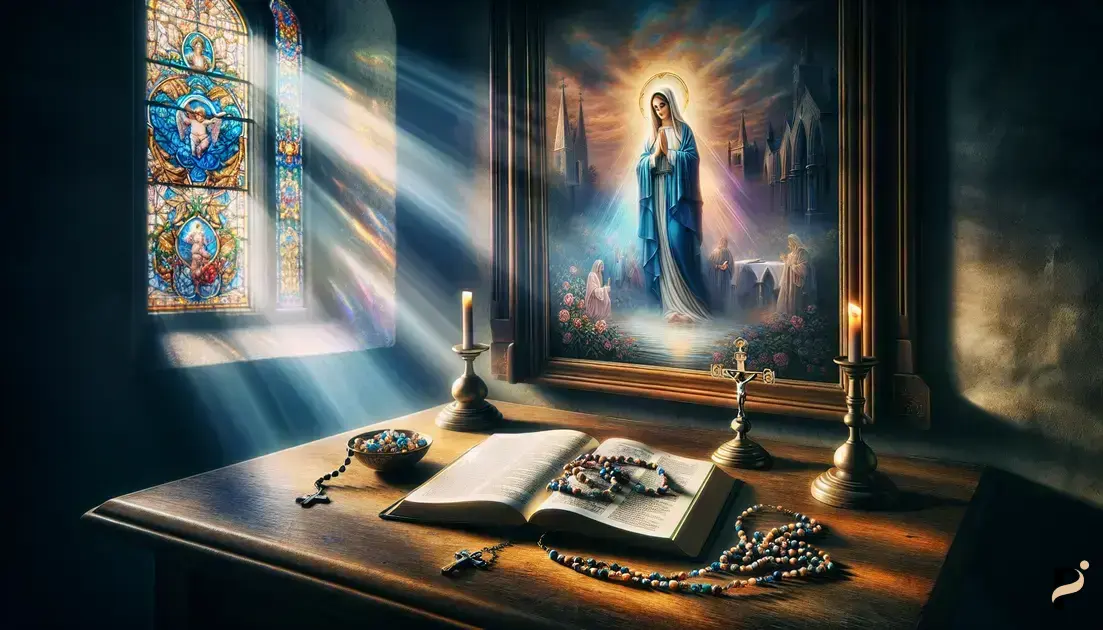
The Hail Mary is a prayer that reflects the unique role of the Virgin Mary in Catholic faith, emphasizing her as a powerful intercessor for believers. This prayer beautifully marries deep reverence for Mary with profound theological truths about her life and mission.
It begins with the words of the Angel Gabriel at the Annunciation—“Hail Mary, full of grace, the Lord is with thee.” This greeting highlights Mary’s special status, chosen by God to bear the Son of God. By acknowledging her grace and favor, we recognize the importance of her role in Salvation History.
The phrase “blessed art thou among women” is a reminder of Mary’s unique position in the Church. Catholics honor her not only for her role as Jesus’ mother but also as a model of faithfulness and obedience to God’s will. She embodies humility and acceptance, which are qualities we strive to emulate in our own lives.
As we move into the latter part of the prayer—“Holy Mary, Mother of God, pray for us sinners, now and at the hour of our death”—we ask for Mary’s intercession on our behalf. This is significant in Catholicism, as it reflects the belief that Mary, being in close communion with her Son, holds a special place to beseech God’s mercy for us.
This prayer is often recited in the Rosary, where it serves as a meditative invitation to reflect on the mysteries of Christ’s life. Each repetition draws us deeper into meditation and reminds us to seek Mary’s guidance as we navigate our spiritual journey.
Embracing Mary’s intercession through the Hail Mary is more than just asking for help; it’s about developing a relationship with the maternal figure of our faith. She encourages us to trust in God’s plans and offers us comfort as we strive to navigate the complexities of life with faith and grace.
In summary, the Hail Mary is not merely a prayer; it is an invitation to grow closer to Mary and, through her, to Jesus. It encourages us to see her as a guiding light—an advocate who nurtures our faith and helps us draw nearer to God’s love.
The Rosary: A Journey of Meditation and Reflection
The Rosary is more than just a string of beads; it is a profound spiritual tool that facilitates meditation and reflection on the life of Christ and the virtues of the Virgin Mary. As a central practice in Catholicism, praying the Rosary invites believers to enter into a deep contemplative prayer experience, transforming the act of prayer into a journey of the heart and mind.
Each Rosary consists of a series of prayers—primarily the Our Father and Hail Mary—that are recited while meditating on specific mysteries from the lives of Jesus and Mary. These mysteries are categorized into four groups: the Joyful, Sorrowful, Glorious, and Luminous Mysteries, each reflecting different aspects of faith, devotion, and the Christian journey.
When praying the Rosary, one moves through these mysteries, allowing the narrative to unfold. For instance, the Joyful Mysteries invite reflection on Christ’s incarnation and early life, evoking joy and gratitude for God’s presence in the world. In contrast, the Sorrowful Mysteries lead one through the Passion of Christ, encouraging a deeper understanding of sacrifice and love.
This meditative practice immerses the participant in the events of salvation history, inviting them to not only intellectually engage with the stories but also emotionally connect with their significance. Each repetition of prayer can bring new insights, fostering personal growth and a stronger faith.
The Rosary also serves as a communal prayer, often recited in groups, which builds a sense of connection among participants. This collective aspect emphasizes the communal nature of Catholic faith, reminding us that we are part of a larger family, united in prayer and purpose.
Additionally, praying the Rosary can be a powerful spiritual retreat in a busy world. It offers a structured way to step back and refocus one’s heart on God, promoting peace and calm amidst life’s challenges. Many find solace and strength through this beautiful practice, experiencing Mary’s maternal guidance through prayer.
In conclusion, the Rosary is not just a ritual; it is a transformative spiritual journey that deepens one’s relationship with God and Mary. It encourages a contemplative mindset, fostering growth in faith and a holistic understanding of the Christian narrative, making it an invaluable part of Catholic devotion.
The Prayer of St. Francis: Living a Life of Service
 Conteúdo não disponível
Conclusion
In exploring traditional Catholic prayers such as the Our Father, Hail Mary, Rosary, and the Prayer of St. Francis, we discover profound pathways to deepening our faith and spiritual lives.
Each prayer offers unique insights and reflections that guide us through our daily challenges and joys, encouraging a closer relationship with God.
These prayers serve not only as a means of personal devotion but also as a bridge to the community. They remind us of our shared beliefs and the importance of intercession, service, and love among ourselves and others.
By integrating these prayers into our lives, we can cultivate a spirit of peace and compassion, reflecting the teachings of Jesus and the virtues exemplified by Mary and the saints.
Ultimately, traditional Catholic prayers are more than mere words—they are invitations to live out our faith authentically, embodying the principles of humility, service, and devotion.
As we engage with these spiritual practices, we find strength, purpose, and a profound connection to our faith and fellow believers.
Let us embrace this journey of meditation and reflection as we strive to strengthen our relationship with God and one another.
FAQ – Traditional Catholic Prayers
What is the significance of the Our Father in Catholicism?
The Our Father is central to Catholic prayer life, taught by Jesus as a model of how to pray, encapsulating key elements of faith in community and reliance on God.
How does the Hail Mary serve the faithful?
The Hail Mary emphasizes Mary’s role as intercessor, inviting believers to seek her guidance and support in their spiritual journey.
What benefits does praying the Rosary provide?
Praying the Rosary fosters meditation on key events of Christ’s life and encourages deeper contemplation of faith, promoting spiritual growth and community connection.
Why is the Prayer of St. Francis important?
The Prayer of St. Francis calls for a life of service, peace, and humility, inspiring believers to embody these values in their daily interactions and relationships.
Can these prayers be recited in community settings?
Yes, many of these prayers are commonly recited in community settings, such as during Mass or prayer groups, fostering a sense of unity among participants.
How can traditional prayers enhance one’s spiritual life?
Traditional prayers provide structure for personal devotion and help deepen one’s relationship with God, fostering a sense of peace, hope, and connection with the broader faith community.